

Keep the cold out of your home with cavity wall insulation.
Request a callback from our energy saving experts today!
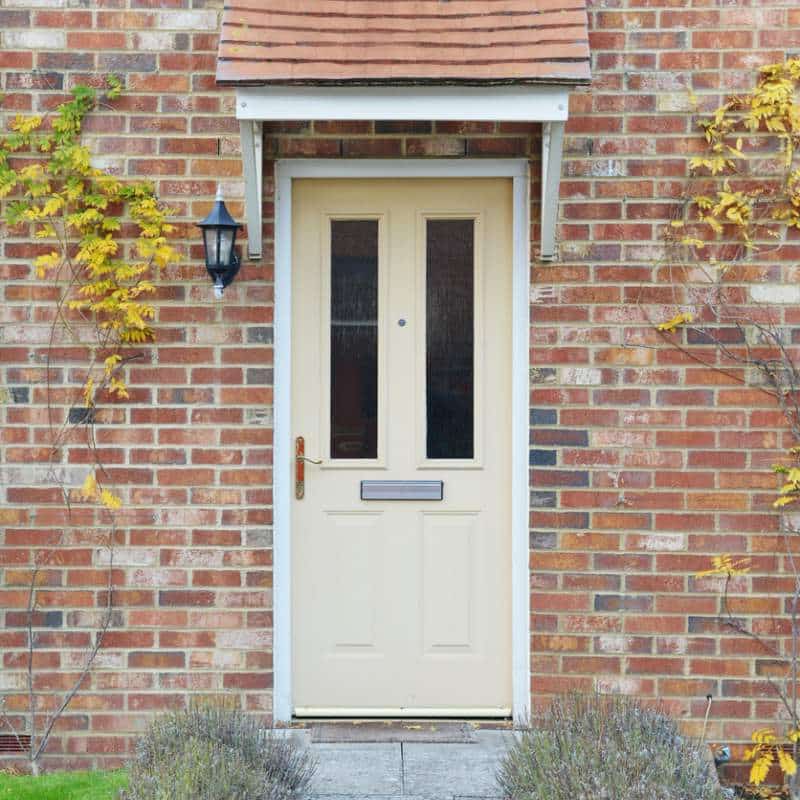
What are the benefits of cavity wall insulation?
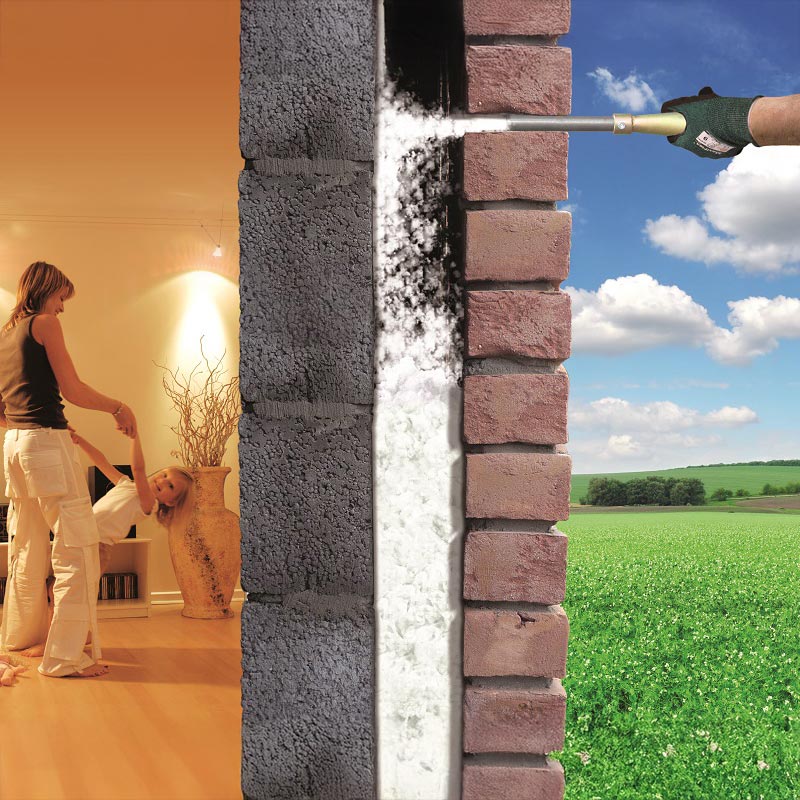
Your home must have cavity walls to be eligible for this type of insulation. A cavity wall is made up of two walls with a gap in between, hence the name cavity.
When insulation is sandwiched between this gap, it helps form a barrier between the walls in your home and the outside elements. There’s less chance of heat escaping in winter, and stifling heat entering in the summer.
What’s stopping you from making your home more energy-efficient? According to the Energy Saving trust, cavity wall insulation can help save you up to £410 a year on your energy bills.
How is cavity insulation installed?
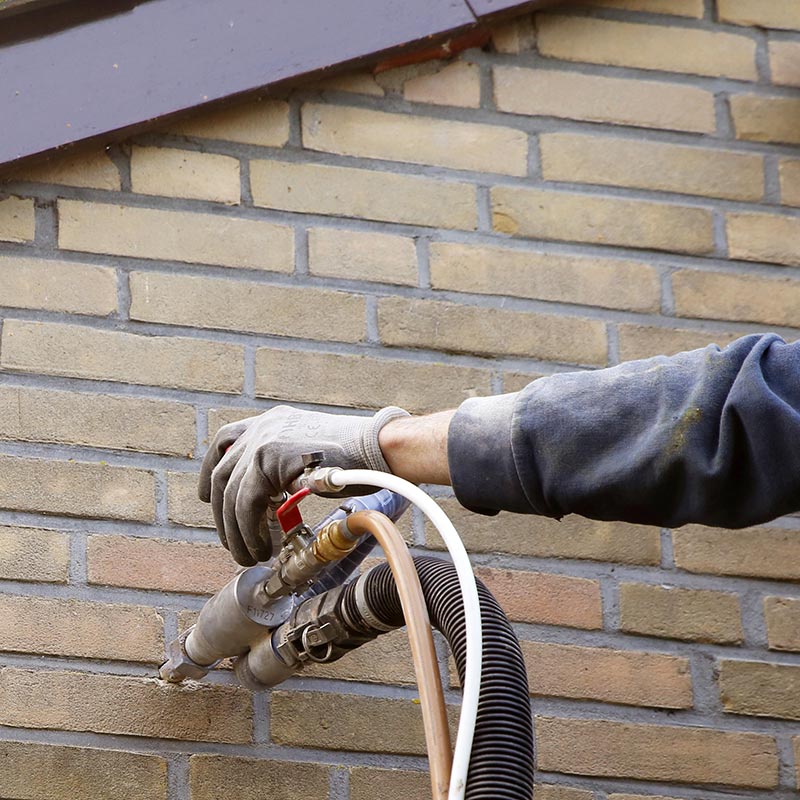
Cavity wall insulation is often made from either mineral wool or polyurethane foam. Small drill holes are made in your external wall, and the insulation material is blown through the holes and into the cavity.
Once the cavity has been filled with insulation, the holes are filled with mortar. The installation is generally a quick process, and it usually takes around two hours, but this does depend on the size of your house.
How do I know if I’ve got cavity walls?
If your home was built after 1920, it is more than likely to have been built with cavity walls, and would be suitable for cavity wall insulation.
If you’re not sure when your home was built, you can take a step outside and look at the exterior. If the bricks all look to be the same length, the chances are you’ve got cavity walls. A mixture of long and short bricks is a sign of a solid wall.
If you’re not able to see any exterior bricks as your home has been rendered, you can measure the thickness of your walls to see if they’re more than about 260mm thick. If they are, then you’ll probably have cavity walls.