

Make your home more energy-efficient and slash energy bills with internal wall insulation.
Request a callback from our energy saving experts today!
Lower energy bills with internal wall insulation
The Energy Saving Trust reports that you can expect to see savings of around £550 on your annual heating bills when your home has internal wall insulation.
Homes can lose up to 40% of heat through the external walls, with solid wall homes being especially vulnerable due to their design and construction methods.
Buildings built before the 1920s are likely to have solid walls (without a cavity), so if your home has internal wall insulation you can feel the benefit in your pocket and inside your home.
Types of internal wall insulation
There are different ways to insulate a solid-walled building internally, but they broadly fall into three categories:
Insulated plasterboards: Insulated plasterboards come in several materials and thicknesses and are usually the best option for insulating your home internally. They provide the highest energy saving, meaning you make savings on your heating bills. The installation of insulated plasterboards is very simple compared to other internal wall insulation methods.
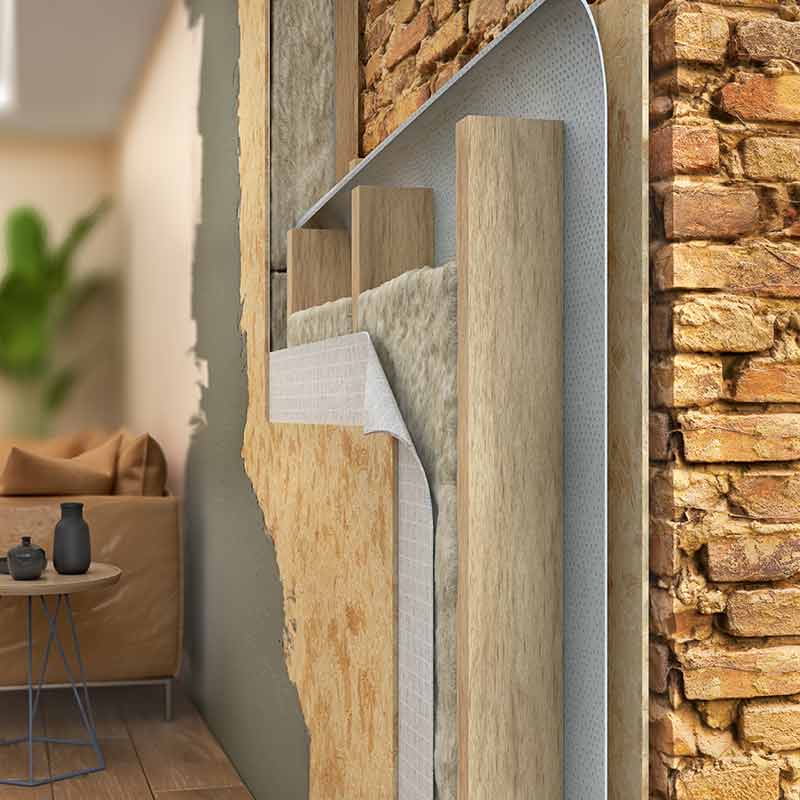
Dry lining: Dry lining your internal walls is a good way to add insulation when the walls are irregular and rough, or if heavy objects are to be fixed to the walls. Studwork is fastened to the wall and the insulation is placed between them and covered with plasterboard. With regards to insulation, there are many types that can be used such as Rockwool or foil insulation.

What are the benefits of internal wall insulation?
There are many benefits of internal wall insulation, from improving the thermal efficiency of your property to:
- Significantly reducing heat loss from your property
- Saving on your energy bills
- No need to change the property’s exterior
- It’s up to 50% cheaper than external wall insulation
- Reducing your carbon footprint