

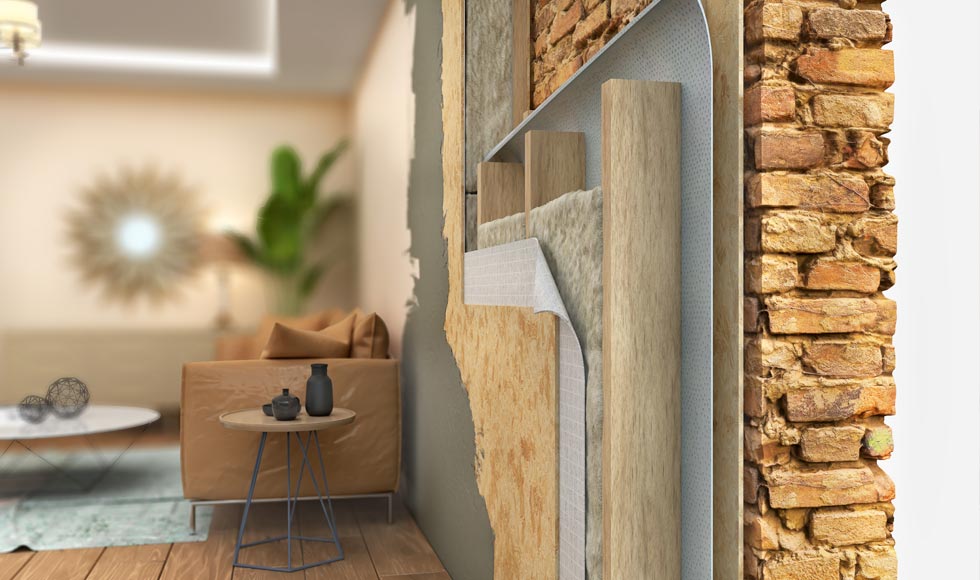
Internal wall insulation is fitted to the inside of your external walls. Its purpose is to keep warmth in, cold out, and reduce energy bills.
If you’ve been advised that internal wall insulation could benefit your home, it’s natural to wonder what it involves, how it’s installed, and whether it’s worth it. With so many types of insulation available, it can feel confusing but understanding the basics makes it much easier to decide.
What is internal wall insulation?
Also known as solid wall insulation, internal wall insulation is designed for homes with solid walls rather than cavity walls. Unlike cavity wall insulation, which fills the gap between two layers of brick, this method adds insulation directly to the inside surface of external walls.
Because of this, it’s a more involved process. Insulated boards or panels are fixed to the walls and then plastered over. Before installation, furniture needs to be moved and items like skirting boards, sockets, and switches are temporarily removed. Installers usually handle the technical removals and refit everything afterwards, you’ll just need to move your furniture back and redecorate if needed.
Most projects take a few days, although timing can vary depending on the size of your home.
How does internal wall insulation work?
Internal wall insulation creates a thermal barrier inside your home. By lining the internal walls with insulating material, it slows down heat escaping and prevents cold air from getting in.
Common materials and methods include:
- Insulated plasterboard (plasterboard bonded to rigid insulation)
- Mineral wool
- Natural options like sheep’s wool, wood fibre, or cork
What are the benefits of internal wall insulation?
- Better heat retention – Keeps your home warmer and more comfortable
- Lower energy bills – Reduces the amount of heating needed
- Improved soundproofing – Helps limit noise from outside
- No external changes – Ideal for properties where the exterior must remain unchanged
- Flexible installation – Can be applied room by room if needed
What should you consider?
- Loss of space: Insulation adds thickness to walls (typically 60–100mm), slightly reducing room size
- Moisture and ventilation: Proper ventilation is essential to prevent trapped moisture and damp issues
Is internal wall insulation right for you?
Internal wall insulation is an effective way to improve energy efficiency, increase comfort, and cut heating costs—especially in homes with solid walls. It can make a noticeable difference to how warm your home feels.
There may also be funding available through government schemes, which could help cover the cost, so it’s worth checking what support you might be eligible for. We can help with this, simply contact us today!