

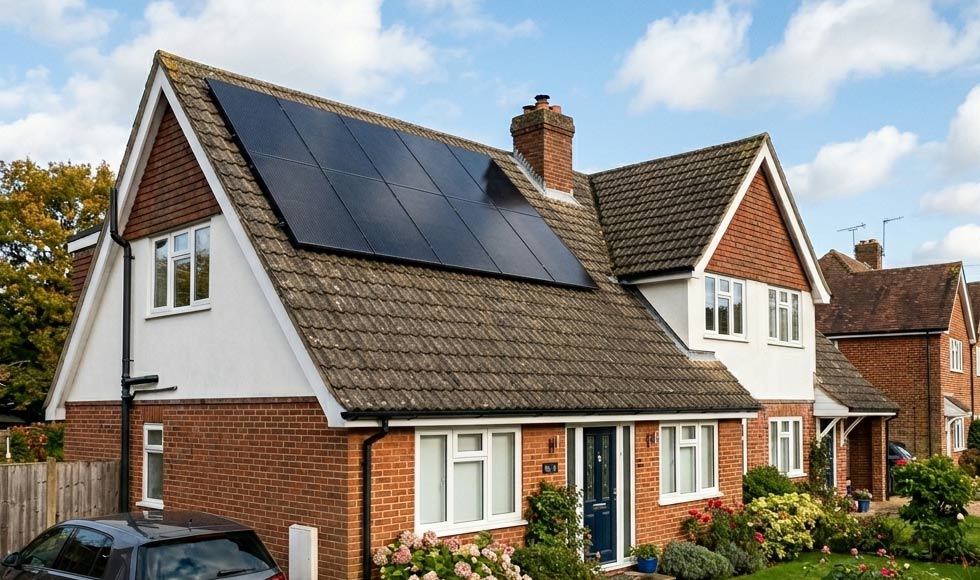
This guide explains the current solar panel grants, tax incentives, and upcoming loan schemes available across the UK, along with eligibility requirements and application steps.
With energy costs remaining a major concern for many households, solar panels continue to be an attractive way to reduce electricity bills and increase energy independence. While completely free solar panel installations are not widely available, several government-backed schemes can help eligible households significantly reduce, or even eliminate, the upfront cost.
Financial support available for solar panels
Government support for solar energy generally falls into four categories:
Solar panel grants
Some low-income and vulnerable households may qualify for grants that cover part or all of the installation costs for solar panels and related energy-efficiency upgrades.
Zero VAT on solar panels
Homeowners can currently benefit from a temporary VAT reduction, lowering the overall cost of installing solar panels and battery storage systems.
Solar panel loans
A new government-backed loan programme is expected to launch in the coming years, providing affordable financing options for homeowners who do not qualify for grant funding.
Solar panel incentives
A new government-backed loan programme is expected to launch in the coming years, providing affordable financing options for homeowners who do not qualify for grant funding.
Current solar panel funding schemes and incentives
Warm Homes Plan
The Warm Homes Local Grant is currently one of the main routes to obtaining fully funded solar panels for qualifying households.
Key details:
- Funding of up to £15,000 for eligible energy-efficiency improvements
- Available to households with incomes typically below £36,000
- Property must generally have an Energy Performance Certificate (EPC) rating between D and G
- Available to both owner-occupiers and private tenants
- Operates in England through local authorities
- Funding available until March 2028
The scheme forms part of the government’s wider Warm Homes Plan, which aims to improve energy efficiency across millions of homes.
Local councils manage the programme and determine final eligibility. An assessment is usually carried out before any improvements are approved, and the recommended upgrades may include insulation, heating measures, batteries, or solar panels.
Equivalent schemes are available in Scotland, Wales, and Northern Ireland.
Zero VAT on solar panels
Even households that do not qualify for grant funding can reduce installation costs through the current VAT relief scheme.
Until 31 March 2027, VAT on domestic solar panel and battery installations has been reduced from 20% to 0%.
Benefits include:
- Lower installation costs
- Savings on both equipment and labour
- Potential reductions of £1,000–£2,000 depending on system size
The incentive is available to homeowners throughout the UK when installations are carried out by appropriately certified installers.
Future Consumer Loan Scheme
As part of the government’s broader Warm Homes strategy, a national loan programme is expected to launch in 2027.
The scheme is designed to help homeowners spread the cost of solar panel installations through government-backed, low-interest financing.
While full details have not yet been released, proposals include:
- Affordable loans available to all homeowners
- Potential interest-free options for lower-income households
- Financing for solar panels and other energy-efficiency improvements
Unlike grants, any funds received through the loan scheme will need to be repaid.
Smart Export Guarantee (SEG)
The Smart Export Guarantee (SEG) can help households with solar panels and other eligible renewable energy systems offset rising energy costs by paying them for surplus electricity exported to the grid.
Key benefits of the SEG include:
- Support the UK’s transition towards cleaner, more sustainable energy sources.
- Earn money from excess electricity that would otherwise go unused.
- Improve the return on investment for solar panels and other renewable technologies.
- Reduce overall household energy costs alongside savings from self-generated power.
- Benefit from an additional income stream during periods of high energy prices.
Why solar panels are worth considering
Although installing solar panels involves an upfront investment, the long-term benefits can be substantial.
Lower exposure to rising energy prices – Generating electricity at home reduces reliance on grid power and can provide protection against future increases in energy costs.
Ongoing savings – The amount saved varies depending on system size, household consumption, and participation in export tariff programmes. Many homeowners can save hundreds of pounds annually on electricity bills.
Increased property appeal – Energy-efficient homes are often more attractive to buyers. Research suggests that solar panel installations can contribute positively to property value and marketability.
Government support for solar energy is currently stronger than it has been in many years. Eligible households may be able to access fully funded installations through schemes such as the Warm Homes Plan or other local funding opportunities, while all homeowners can benefit from the temporary VAT reduction.
With additional low-interest financing expected in the near future, now may be an excellent time to explore whether solar panels are a suitable investment for your home.